
How Micro-Moments Build Macro-Connections With Your Teen (Based on Their Communication Style)

Introduction – Small Moments, Big Impact
You planned the perfect one-on-one time with your teen.
You cleared your schedule. You brought their favorite snack. You were ready for connection.
And… they barely looked up from their phone.
Sound familiar?
The truth is, deep connection with your teen doesn’t come from grand gestures or planned-out “quality time.”
It’s built in the in-between.
In the short car rides.
The quiet moments before bed.
The quick laugh over a shared meme.
These are what I call micro-moments—small, meaningful interactions that, over time, build the foundation for trust, closeness, and emotional safety.
And here’s the secret:
These moments matter even more when you match them to your teen’s unique communication style.
Because not every teen wants the same kind of connection.
Some need quick, to-the-point check-ins.
Some need light and playful moments.
Some just need your calm, steady presence.
In this post, I’ll show you:
✔️ What micro-moments are and why they matter
✔️ How your teen’s personality shapes the way they receive connection
✔️ Simple ideas to start creating meaningful moments today—without pressure or overthinking it
Let’s stop waiting for the “perfect” time and start creating moments that count—right where you are.
Main Body
Why Big Moments Aren’t Enough
When we think about connecting with our teens, we often picture the “big moments.”
Vacations. Deep heart-to-hearts. Birthday surprises.
And while those can be meaningful, they’re not enough to build consistent connection.
Here’s why:
- Big moments are rare. Life is busy. You can’t plan deep conversations every day.
- They create pressure. Your teen may not feel like opening up on your schedule.
- They don’t build trust by themselves. Connection isn’t about one big gesture—it’s about daily presence.
Think about it like this:
Would you rather get one big hug a year—or small, consistent signs of love every day?
Your teen is the same. They need to know:
“You see me. You care. You’re here.”
And they need to feel that in everyday moments—not just during planned “quality time.”
That’s why micro-moments matter.
They’re low-pressure. They’re repeatable.
And they create the kind of emotional safety that teens crave—often without a single “serious talk.”
Up next: what exactly is a micro-moment, and how can you start using them to build trust today?al.
What Are Micro-Moments?
Micro-moments are short, intentional interactions that build connection over time.
They don’t take much time.
They don’t require a plan.
And your teen may not even realize they’re happening.
But over time, these moments accumulate into trust, safety, and closeness.
Think of them like emotional deposits.
Every time you show up—calm, present, and attuned—you’re adding to your teen’s “connection bank.”
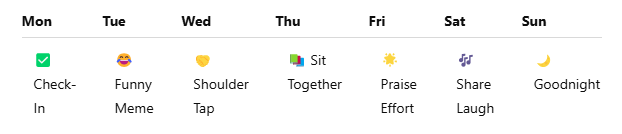
Micro-moments can look like:
- A warm “good morning” with eye contact
- Asking one thoughtful question during dinner
- A 30-second check-in after school
- Sitting beside them while they game or do homework
- A hand on the shoulder as you pass by
- Sending a quick “thinking of you” text during the day
The key isn’t how long these moments are.
It’s that they’re intentional, consistent, and rooted in presence.
And when you align those moments with your teen’s communication style, they go from being nice gestures…
To being powerful tools for emotional connection.
Let’s look at why communication style matters—and how it can make or break your attempts to connect.
Why Communication Style Matters
Not all teens want to connect in the same way.
Some love to talk.
Others need space.
Some want quick answers.
Others want time to think before they speak.
That’s why using a one-size-fits-all approach to connection doesn’t work.
What feels meaningful to you might feel overwhelming—or even annoying—to your teen.
This is where the DISC Communication Style Framework changes everything.
It helps you understand:
- How your teen naturally communicates
- What makes them feel safe and seen
- What shuts them down (even if you didn’t mean to)
When you learn your teen’s style, you stop guessing.
You know how to meet them where they are—without overthinking it.
That’s the real power of micro-moments.
They’re not just random acts of kindness.
They’re targeted deposits of emotional safety that speak directly to your teen’s core needs.
Coming up next:
A breakdown of the four DISC communication styles—and how each type responds to connection.andle tough conversations, let’s talk about how to get them to open up in everyday interactions.this strategy work.
How Each DISC Type Responds to Connection
Every teen needs connection—but how they respond to it depends on how they’re wired.
The DISC framework breaks it down into four core styles.
Each one has a different way of interpreting your presence, your tone, and your attempts to connect.
Understanding your teen’s style helps you stop trying harder—and start connecting smarter.
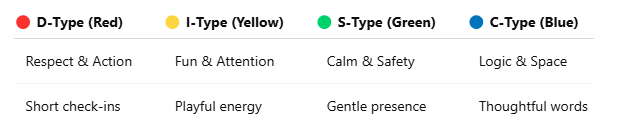
D-Type Teens (Dominant)
What They Value: Respect, independence, efficiency
How They Connect: Fast, focused, low on emotion, high on action
Why They Shut Down: If they feel controlled, lectured, or micromanaged
What builds connection:
- Asking for their input: “What’s your take on this?”
- Keeping it short and direct
- Respecting their need for autonomy
I-Type Teens (Influential)
What They Value: Fun, approval, attention
How They Connect: Expressively, through stories and shared energy
Why They Shut Down: If ignored, criticized, or things feel too serious
What builds connection:
- Positive attention and lightheartedness
- Spontaneous, fun conversations
- Sharing excitement or humor
S-Type Teens (Steady)
What They Value: Harmony, safety, predictability
How They Connect: Slowly, calmly, with emotional warmth
Why They Shut Down: If rushed, pressured, or exposed to conflict
What builds connection:
- Gentle tone and calm presence
- Routine check-ins that feel safe
- Quiet moments side-by-side
C-Type Teens (Conscientious)
What They Value: Logic, precision, space
How They Connect: Thoughtfully, after time to process
Why They Shut Down: If rushed, interrupted, or emotionally overwhelmed
What builds connection:
- Clear expectations
- Time to think before answering
- Respecting their mental space and privacy
No style is better than another. They’re just different.
When you start recognizing these styles in your teen, you stop wondering,
“Why won’t they open up?”
and start asking,
“How can I connect in a way that works for them?”
Next up: practical micro-moment ideas for each communication style.
This is where connection becomes doable.
Micro-Moment Ideas for Every Style
Connection doesn’t have to be complicated. It just has to be consistent—and it has to feel right for your teen.
Below are five micro-moment ideas for each DISC type. Use these as inspiration to meet your teen in a way that feels natural for both of you.
For D-Type Teens (Direct and Independent)
They want to feel respected and capable. Keep it brief, purposeful, and confident.
- Ask for their opinion on something you’re deciding (“What would you do in my place?”)
- Give them a quick high-five or fist bump after they accomplish something
- Send a one-line text that shows you trust them (“I know you’ve got this.”)
- Invite them to take the lead on a small task or decision
- Respect their time by getting to the point when checking in
For I-Type Teens (Expressive and Social)
They thrive on fun, energy, and feeling seen. Lighten the moment and connect playfully.
- Share a funny meme or inside joke that reminds you of them
- Start a spontaneous dance-off or join them in a silly moment
- Say something encouraging and upbeat (“You always bring good energy to this house.”)
- Ask about something exciting they’re looking forward to
- Play music they love and let them DJ the vibe
For S-Type Teens (Steady and Sensitive)
They want peace, predictability, and emotional safety. Keep it soft, calm, and reassuring.
- Sit beside them in silence—no pressure to talk
- Check in gently (“Hey, just wondering how you’re doing today.”)
- Leave a kind sticky note on their mirror or desk
- Ask a soft, open-ended question (“What’s been on your mind lately?”)
- Join them in a low-key activity like baking, folding laundry, or walking the dog
For C-Type Teens (Cautious and Analytical)
They value logic, order, and space. Connection comes through thoughtful, low-pressure interaction.
- Respect their quiet time by showing up with a snack instead of a question
- Text a thoughtful question like, “What did you think about that science article?”
- Praise their effort or precision (“I noticed how much focus you put into that project.”)
- Ask for help with a detail-oriented task—they love problem-solving
- Give them a heads-up before you want to talk (“Let’s check in later today—sound good?”)
You don’t have to use all of these. Just pick one. Try it today.
Over time, these tiny moments build a sense of belonging and trust that your teen can count on.
Next up: how to turn micro-moments into a habit–so they happen more often and with less effort.
How to Build a Micro-Moment Habit
The power of micro-moments isn’t in doing them once—it’s in doing them consistently.
Here’s how to turn small, intentional connection into a daily rhythm that strengthens your relationship over time.
Step 1: Identify Your Teen’s Style
- Think about how your teen naturally responds to communication.
- Are they direct and independent (D)? Playful and energetic (I)?
- Do they crave calm and reassurance (S)? Or quiet and clarity (C)?
✅ Not sure? Download the [DISC Observation Worksheet] to help you spot your teen’s communication type.
Step 2: Choose One Micro-Moment That Fits
Start small.
Pick just one idea from the previous section that matches your teen’s style.
💡 Examples:
- For a D-type: Ask for their opinion on a decision
- For an I-type: Send a fun meme and say, “This made me think of you”
- For an S-type: Give a soft shoulder tap and say, “I’m glad you’re here”
- For a C-type: Leave a sticky note that says, “I noticed how hard you worked—well done.”
Step 3: Repeat It Daily
Don’t wait for the perfect mood or timing.
Just show up. Once a day. Simple and steady.
- You can tie it to a routine (e.g., morning goodbye, after school, bedtime)
- You don’t need them to respond perfectly—just notice how they react over time
Step 4: Reflect Weekly
At the end of the week, ask yourself:
- Did I follow through?
- How did my teen respond—even subtly?
- What felt natural? What felt off?
✅ Adjust your approach if needed—but keep going. Connection grows through repetition.
Step 5: Layer in More
Once one micro-moment feels natural, add another.
- Maybe you start with an after-school check-in
- Then you add a light bedtime touchpoint
- Over time, you’re building a rhythm of consistent connection that fits your teen’s style
Reminder: You’re not trying to do more.
You’re trying to do small things that actually matter—and stick.
Coming up next: what to avoid so your efforts don’t backfire or get overlooked.
Common Mistakes to Avoid
Micro-moments are simple—but a few common missteps can make them fall flat or feel forced.
Here’s what to watch for as you build this habit:
1. Expecting a Big Reaction
❌ Mistake: You expect your teen to light up, thank you, or open up immediately.
✔️ Better: Stay consistent, even if they seem indifferent. Connection builds silently at first.
2. Forcing the Moment
❌ Mistake: You try to squeeze in a heart-to-heart when your teen clearly isn’t in the mood.
✔️ Better: Let the moment be light, natural, and non-intrusive. Read their cues.
3. Copying a Method That Doesn’t Fit Their Style
❌ Mistake: You try to connect through deep conversation, but your teen just wants quiet presence.
✔️ Better: Match your approach to their DISC style. They’ll feel seen, not smothered.
4. Being Inconsistent
❌ Mistake: You connect for a day or two, then forget.
✔️ Better: Pick one small moment and repeat it daily. It’s about rhythm, not effort.
5. Giving Up Too Soon
❌ Mistake: You think, “They didn’t respond, so this isn’t working.”
✔️ Better: Stay the course. Teens may not react right away—but they notice. Consistency earns trust.
Bonus: Making It About You
❌ Mistake: You turn the moment into a teachable lesson or a behavior check.
✔️ Better: Let the moment be about connection, not correction. Connection first. Coaching second.
Remember: You’re planting seeds.
The trust, safety, and openness you want with your teen is the fruit that grows from your consistent, small, everyday presence.
Next up: let’s wrap this up with the final takeaway—and a simple challenge to help parents take action today.
Conclusion: Small Moments, Strong Bonds
You don’t need perfect timing.
You don’t need long conversations.
You don’t need to wait for a breakthrough.
You just need to show up.
One small moment at a time.
A glance.
A smile.
A quick question.
A quiet sit beside them.
This is how trust is built.
This is how walls come down.
This is how your teen learns you’re a safe place—over and over again.
When you align these micro-moments with your teen’s communication style, something shifts:
They stop bracing.
They start relaxing.
They begin to believe, “You get me.”
And that belief?
It’s the beginning of real connection.
Your Turn: Try This Today
Think about your teen’s DISC style
Choose one micro-moment that fits them
Try it out—today
And come back tomorrow and do it again
You’ll be amazed at how these small choices become the big things your teen remembers.
Want Help Matching the Moment to Your Teen’s Style?
Download my free DISC Observation Worksheet to discover your teen’s communication type and start building a connection strategy that works.
0 Comments