
The DISC-Based Parenting Framework: How It Works and Why It’s a Game-Changer

Introduction
Parenting is tough.
You want to connect with your teen, but sometimes it feels like you’re speaking different languages. You give advice, and they shut down. You set boundaries, and they push back.
What if the problem isn’t what you’re saying—but how you’re saying it?
Most parenting struggles come down to communication styles. When parents and teens don’t understand each other’s natural tendencies, frustration builds. But when you learn to speak their language, everything changes.
That’s why I use the DISC-Based Parenting Framework—a simple, powerful tool that helps you understand your teen’s unique personality and tailor your parenting approach for better communication, less conflict, and deeper connection.
By the end of this post, you’ll know:
✅ The four DISC personality types and how they shape your teen’s behavior
✅ Why some teens thrive on structure while others need flexibility
✅ How to adjust your parenting to reduce power struggles and increase cooperation
Let’s dive in.
Main Body
What Is the DISC-Based Parenting Framework?
Ever wonder why some kids love structure while others push against every rule? Why one child thrives on praise, while another seems to analyze everything before making a decision?
That’s where the DISC model comes in.
The DISC-Based Parenting Framework is a behavioral tool that helps you understand your teen’s natural communication and personality style—so you can parent in a way that works for them.
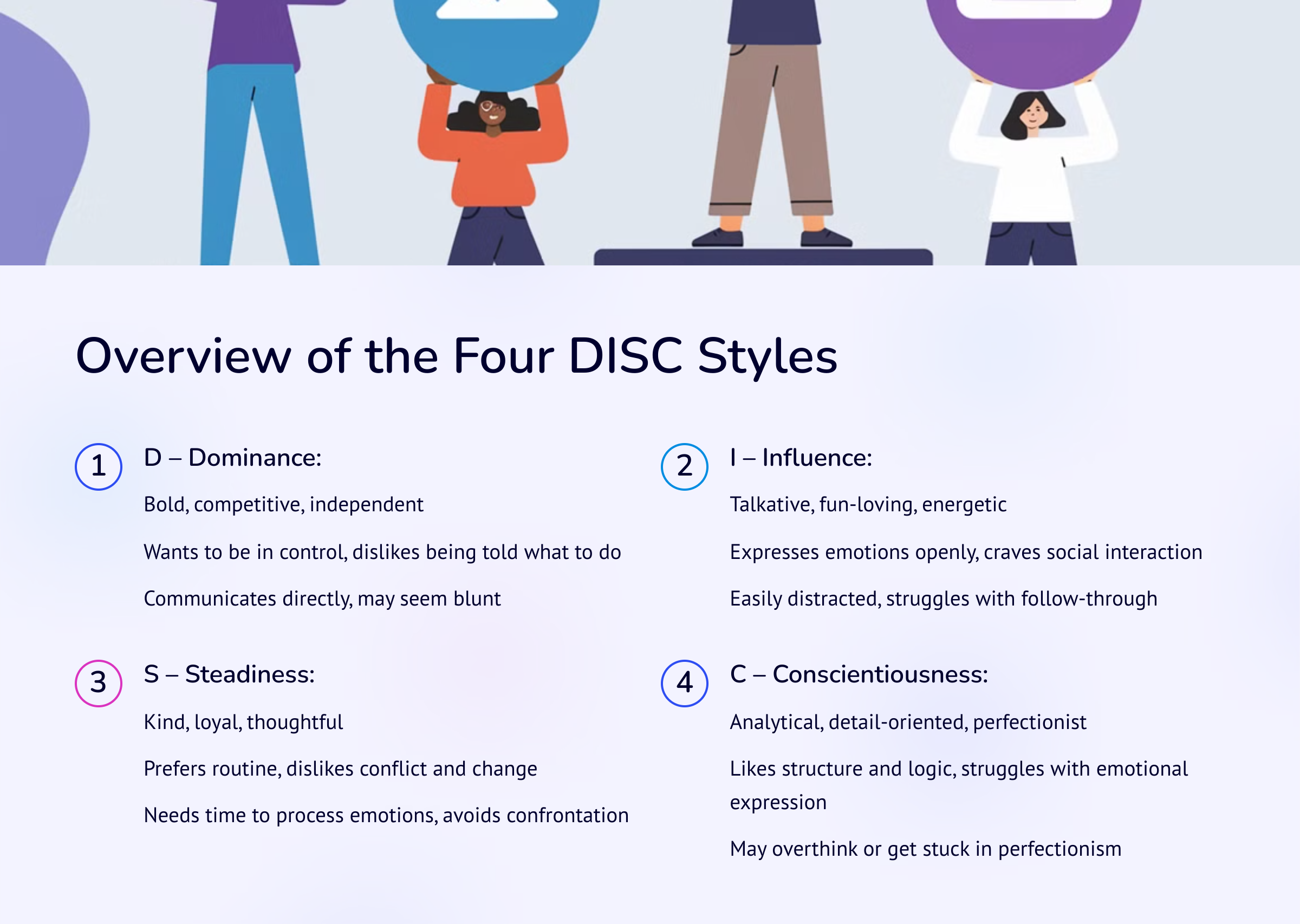
At its core, DISC breaks behavior into four personality types:
✅ D – The Determined Teen (Dominance) → Independent, bold, loves control.
✅ I – The Expressive Teen (Influence) → Social, energetic, thrives on excitement.
✅ S – The Thoughtful Teen (Steadiness) → Loyal, peace-seeking, avoids conflict.
✅ C – The Analytical Teen (Conscientiousness) → Logical, detail-oriented, values fairness.
Why DISC Matters for Parenting
Most parenting approaches assume all kids respond the same way—but they don’t.
✔️ A “D” teen might push back if you’re too controlling.
✔️ An “S” teen might shut down if you’re too direct.
✔️ A “C” teen might need logical reasoning, not just “because I said so.”
When you understand how your teen is wired, you can adjust your parenting to match their needs—leading to fewer conflicts, better conversations, and a stronger relationship.
Next, let’s break down each DISC personality type so you can identify where your teen fits and how to parent them more effectively.
The 4 DISC Personality Types in Parenting
Every teen is different, but most fall into one of four DISC personality types. Understanding your teen’s natural tendencies can help you adjust your parenting style for fewer conflicts and better connection.
Let’s break them down:
1. D – The Determined Teen (Dominance)
🔹 Personality Traits: Confident, independent, goal-driven, direct
🔹 Biggest Struggles: Pushes back against authority, dislikes being told what to do
🔹 What Frustrates Them: Feeling controlled, rules without reasons
How to Parent a D Teen:
✅ Give them choices – Instead of demanding, offer options.
✅ Be direct and efficient – Get to the point without excessive explanation.
✅ Let them take the lead when possible – Give them responsibilities they can own.
✅ Avoid power struggles – If they challenge you, stay firm but calm.
💡 Example: Instead of saying, “You need to clean your room right now,” try, “Would you rather clean up before dinner or right after?” This gives them a sense of control while still accomplishing the goal.
2. I – The Expressive Teen (Influence)
🔹 Personality Traits: Social, energetic, fun-loving, spontaneous
🔹 Biggest Struggles: Easily distracted, struggles with follow-through
🔹 What Frustrates Them: Boredom, feeling restricted, negativity
How to Parent an I Teen:
✅ Make things fun – Turn tasks into a game or challenge.
✅ Use positive reinforcement – They respond well to praise.
✅ Keep communication lighthearted – Avoid being overly serious all the time.
✅ Encourage social interaction – They thrive in group settings.
💡 Example: Instead of saying, “You never finish your chores,” try, “Let’s see how fast you can clean up—we’ll time it!” This keeps them engaged without feeling like they’re being forced.
3. S – The Thoughtful Teen (Steadiness)
🔹 Personality Traits: Loyal, sensitive, peace-seeking, dependable
🔹 Biggest Struggles: Shuts down under pressure, avoids conflict
🔹 What Frustrates Them: Harsh criticism, fast-paced changes, tension
How to Parent an S Teen:
✅ Be patient and gentle – They need emotional safety.
✅ Give them time to process things – Don’t expect immediate responses.
✅ Avoid harsh discipline – Correct them with kindness.
✅ Provide reassurance – They want to know everything is okay.
💡 Example: Instead of saying, “You need to speak up more,” try, “I love hearing your thoughts. Take your time—I’m listening.” This helps them feel safe to express themselves.
4. C – The Analytical Teen (Conscientiousness)
🔹 Personality Traits: Logical, detail-oriented, cautious, perfectionistic
🔹 Biggest Struggles: Overthinks, struggles with criticism, resistant to change
🔹 What Frustrates Them: Inconsistency, emotional outbursts, unclear rules
How to Parent a C Teen:
✅ Be logical and structured – They need clear rules and expectations.
✅ Give them time to think before responding – Don’t rush them.
✅ Avoid emotional appeals – They prefer facts over feelings.
✅ Respect their need for accuracy – Praise their attention to detail.
💡 Example: Instead of saying, “Just do it because I said so,” try, “Here’s why this rule exists—let me explain how it helps.” This shows you respect their need for logic.
What If Your Teen Doesn’t Fit Just One Type?
Most teens are a mix of two DISC types, with one being dominant. Pay attention to how they naturally react to situations to get a clearer picture.
Now that you know the four DISC types, let’s explore why this matters for communication—and how to use this knowledge to reduce frustration in daily parenting.
Why Your Teen’s Personality Impacts Communication
If you’ve ever thought, “Why doesn’t my teen listen to me?”—you’re not alone.
Many parent-teen conflicts happen not because of what’s being said, but because of how it’s being said. Your teen’s personality type influences how they process information, express emotions, and respond to authority.
Here’s why this matters:
1. Different Teens Respond to Communication Styles Differently
Imagine you have two teens:
👩🎓 One is an analytical, detail-oriented thinker (C-type).
🎉 The other is a spontaneous, social butterfly (I-type).
If you tell them both, “You need to study for your test,” you’ll likely get two completely different reactions:
❌ C-type: “Why? What exactly do I need to focus on? Can you be more specific?”
❌ I-type: “Ugh, that sounds boring. Do I have to?”
Same words, totally different responses.
2. A One-Size-Fits-All Parenting Approach Leads to Frustration
🚨 The biggest mistake parents make? Treating every teen the same.
✔️ D-types (Determined) need short, direct communication—they tune out long explanations.
✔️ I-types (Expressive) need enthusiasm and engagement—they don’t respond well to negativity.
✔️ S-types (Thoughtful) need emotional safety—harsh words make them withdraw.
✔️ C-types (Analytical) need logic and details—vague instructions frustrate them.
💡 When you adapt to your teen’s personality, they feel understood—and communication improves.
3. When Teens Feel Misunderstood, They Shut Down or Push Back
Ever notice how:
❌ Some teens rebel more when you enforce rules strictly?
❌ Some shut down when asked too many questions?
❌ Some seem to overanalyze everything?
👉 This isn’t random—it’s their DISC personality in action.
When you communicate in a way that doesn’t align with their natural style, they either:
🔺 Fight back (D-type teens hate feeling controlled).
🔺 Lose interest (I-types disengage if things feel dull).
🔺 Withdraw (S-types avoid conflict).
🔺 Overthink (C-types get stuck in analysis mode).
4. The Key to Better Communication? Meet Them Where They Are
✅ Instead of expecting your teen to change, adjust your approach.
✔️ D-type teens? Be clear, direct, and give them choices.
✔️ I-type teens? Keep it lighthearted and engaging.
✔️ S-type teens? Use a calm, reassuring tone.
✔️ C-type teens? Provide logic and structure.
The more you adapt to their natural tendencies, the easier conversations become.
The Bottom Line
Your teen isn’t difficult—they just have a unique way of thinking and communicating.
When you understand their DISC personality, you can avoid unnecessary conflicts, improve cooperation, and create a stronger parent-teen bond.
Next, let’s talk about how to actually apply this knowledge in your daily parenting.gy work.
How to Adapt Your Parenting Using DISC
Now that you understand why your teen’s personality impacts communication, let’s talk about how to adjust your parenting approach.
Here’s a simple, three-step process to start using DISC in your daily interactions:
Step 1: Identify Your Teen’s DISC Type
Think about how your teen naturally behaves in different situations:
| Question | D (Determined) | I (Expressive) | S (Thoughtful) | C (Analytical) |
|---|---|---|---|---|
| How do they handle rules? | Challenge them | Ignore them | Follow them | Question them |
| How do they react to criticism? | Defend themselves | Brush it off | Take it personally | Overanalyze it |
| How do they make decisions? | Quickly, on their own | Spontaneously | Slowly, seeking reassurance | Carefully, weighing all options |
| How do they respond to authority? | Resist control | Seek approval | Want harmony | Respect structure |
💡 Need help identifying your teen’s DISC type? Download my free DISC Style Quiz to get a step-by-step guide on recognizing their personality style. subscribepage.io/discstylequiz
Step 2: Adjust Your Parenting Style to Match Their Needs
Once you recognize their DISC type, tweak your approach for better cooperation and fewer conflicts.
✔️ Parenting a D-Type Teen (Determined)
- Give them choices instead of commands.
- Keep communication short and direct—don’t over-explain.
- Let them have some control in decision-making.
- Avoid unnecessary power struggles—stay firm but fair.
Example:
❌ “You need to do your homework now.”
✔️ “Would you rather finish your homework before or after dinner?”
✔️ Parenting an I-Type Teen (Expressive)
- Use positive reinforcement—they thrive on encouragement.
- Make things fun and engaging—avoid making everything a “chore.”
- Allow for social interactions—they need connection.
- Keep discipline light—harshness will push them away.
Example:
❌ “Stop playing around and focus.”
✔️ “Let’s see how quickly you can finish this—want to race the clock?”
✔️ Parenting an S-Type Teen (Thoughtful)
- Be gentle and patient—they shut down under pressure.
- Offer emotional reassurance—they need to feel secure.
- Avoid harsh criticism—they take things personally.
- Give them clear routines—they like predictability.
Example:
❌ “You need to be more confident and speak up.”
✔️ “I love hearing your thoughts. Take your time—I’m listening.”
✔️ Parenting a C-Type Teen (Analytical)
- Provide logical explanations—they need things to make sense.
- Give them time to process information—don’t rush them.
- Be consistent—they dislike unpredictability.
- Avoid emotional appeals—facts work better than feelings.
Example:
❌ “Just do what I said.”
✔️ “Here’s why this rule exists—let me explain how it helps.”
Step 3: Practice Small Adjustments and Observe Changes
Parenting is about progress, not perfection. You don’t need to overhaul your approach overnight—just start with one small shift.
✅ Pick one communication strategy from this list and try it for a week.
✅ Notice how your teen responds. Do they engage better? Push back less?
✅ Tweak your approach as needed. Every teen is unique, so adjust accordingly.
The more you adapt to their natural communication style, the easier parenting becomes.
The Bottom Line
Your teen’s personality isn’t a problem to fix—it’s a guide to follow.
By understanding their DISC type and adjusting how you communicate, you’ll see:
✔️ Fewer misunderstandings
✔️ Less resistance
✔️ More cooperation
✔️ A deeper, more connected relationship
Next, let’s look at real-life examples of parents who used DISC to transform their family dynamics.
Real-Life Parenting Examples
Understanding the DISC-Based Parenting Framework is one thing—seeing it in action is where the real impact happens. Let’s look at three real-life scenarios where small shifts in communication made a big difference.
Example 1: Stopping Power Struggles with a D-Type Teen (Determined)
The Struggle:
Lisa’s 15-year-old son, Jake, constantly pushed back when she asked him to do anything. Whether it was chores, homework, or curfew, every request turned into a power struggle.
What Was Happening?
Jake is a D-type teen—he thrives on independence and control. Lisa was unknowingly triggering resistance by telling him what to do instead of giving him choices.
The Shift:
Lisa changed her approach from commands to options:
❌ “You need to clean your room right now.” → ❌ Jake resisted.
✔️ “Would you rather clean your room before dinner or after?” → ✔️ Jake felt in control and complied.
The Result:
Jake stopped arguing so much because he felt like he had a say. Lisa realized that small wording changes helped her son cooperate instead of resist.
Example 2: Keeping an I-Type Teen (Expressive) on Task
The Struggle:
Amanda’s daughter, Sophia, was high-energy and easily distracted. Homework took hours because she’d get sidetracked by social media, snacks, or random conversations.
What Was Happening?
Sophia is an I-type teen—she thrives on fun and social interaction. A rigid, quiet study environment wasn’t engaging enough to hold her focus.
The Shift:
Amanda made homework fun and interactive:
❌ “You need to sit still and focus.” → ❌ Sophia got bored quickly.
✔️ “Let’s turn this into a challenge—can you finish this worksheet in 15 minutes? I’ll time you!” → ✔️ Sophia stayed engaged and focused.
The Result:
Sophia finished her work faster when it felt like a game instead of a chore. Amanda learned that injecting fun and positive reinforcement helped her daughter stay on task.
Example 3: Helping an S-Type Teen (Thoughtful) Open Up
The Struggle:
David felt disconnected from his son, Ethan. Whenever David asked how Ethan was doing, the response was always “I’m fine.” Conversations never went deeper.
What Was Happening?
Ethan is an S-type teen—he values emotional safety and harmony. He avoided deeper conversations because he feared judgment or pressure.
The Shift:
David created a safe, low-pressure way to connect:
❌ “You never tell me anything. Just talk to me.” → ❌ Ethan withdrew even more.
✔️ “Hey, let’s take a drive and listen to some music—no pressure to talk, but I’d love to hear about your day when you’re ready.” → ✔️ Ethan relaxed and eventually opened up.
The Result:
Ethan started sharing more when the pressure was off. David realized that creating a calm, judgment-free space made his son feel safe to talk.
Example 4: Helping a C-Type Teen (Analytical) Accept Feedback
The Struggle:
Sarah’s 17-year-old daughter, Emily, was perfectionistic and super sensitive to criticism. Even small corrections—like pointing out a math mistake—made her shut down.
What Was Happening?
Emily is a C-type teen—she values accuracy and logic. She didn’t react well to vague or emotional feedback; she needed clear, specific reasoning.
The Shift:
Sarah started explaining corrections with logic instead of emotion:
❌ “You need to stop overreacting—it’s just a small mistake.” → ❌ Emily felt dismissed and upset.
✔️ “Your answer is close! If you tweak this one step, you’ll get the right solution.” → ✔️ Emily stayed engaged and appreciated the logic.
The Result:
Emily became less defensive and more open to feedback when it was framed as a logical adjustment rather than criticism.
Your Turn: What’s Your Teen’s DISC Type?
Think about your own teen. Do any of these situations sound familiar?
✅ Which DISC type do they match most closely?
✅ How can you tweak your approach to match their communication style?
The small shifts you make today can lead to big improvements in your parent-teen relationship.
Up next, let’s cover common mistakes parents make when using DISC—so you can avoid them and see results faster!today.
Common Mistakes Parents Make When Using DISC
Understanding DISC can transform your parenting, but only if you use it the right way. Many parents unintentionally misuse DISC, leading to frustration instead of better communication.
Here are the most common mistakes parents make—and how to avoid them.
1. Trying to “Change” Your Teen’s Personality
❌ Mistake: Using DISC to force your teen into a different personality type.
✔️ Better Approach: Accept and work with their natural strengths instead of trying to “fix” them.
💡 Example:
- A D-type teen isn’t “too bossy”—they’re a natural leader.
- An I-type teen isn’t “too distracted”—they thrive on fun and social interaction.
- An S-type teen isn’t “too sensitive”—they value emotional connection.
- A C-type teen isn’t “too rigid”—they prefer logic and structure.
Instead of changing your teen, adapt how you communicate so they feel understood, not criticized.
2. Using Your Own DISC Style Instead of Theirs
❌ Mistake: Communicating in a way that makes sense to you—but not to your teen.
✔️ Better Approach: Adjust your style to match how they naturally think and process.
💡 Example:
- A D-type parent might say, “Just do it—no excuses.” But their S-type teen may need gentle encouragement instead.
- An I-type parent may joke around too much, frustrating their C-type teen who prefers clear, direct instructions.
Solution: Instead of assuming your way is best, observe how your teen responds and adjust accordingly.
3. Labeling Your Teen Instead of Understanding Them
❌ Mistake: Saying, “Oh, you’re such a ‘D’—that’s why you’re difficult.”
✔️ Better Approach: Use DISC to understand behaviors, not to box your teen into a label.
💡 Example:
- Instead of “You’re so stubborn” → Say, “I see you like having control. Let’s find a way to make this work for both of us.”
- Instead of “You’re too emotional” → Say, “I know you feel deeply. Let’s talk through what’s bothering you.”
Your teen should feel validated, not labeled. DISC is a tool for connection, not a personality test to define them.
4. Assuming DISC Is Fixed and Never Changes
❌ Mistake: Thinking your teen will always stay the same and never evolve.
✔️ Better Approach: Recognize that personality develops over time.
💡 Reality Check:
- A C-type child may develop more confidence and leadership over time.
- An I-type teen may become more structured as they mature.
- A D-type teen may soften their approach with experience.
Solution: Stay flexible and keep observing how your teen grows and changes—adjust your approach as needed.
5. Not Adjusting Your Parenting Over Time
❌ Mistake: Using the same approach even when it’s no longer working.
✔️ Better Approach: Continuously adapt.
💡 Example:
- What worked when your teen was 13 may not work when they’re 16.
- Their school, social circle, and stress levels change—so should your approach.
Solution: Check in with yourself regularly:
✅ Is my teen responding well to how I communicate?
✅ Have their needs shifted as they’ve grown?
✅ Am I giving them space to evolve while still guiding them?
The Bottom Line:
DISC is a tool, not a rulebook. The goal isn’t to label your teen—it’s to understand them better so you can communicate effectively.
When used correctly, DISC can:
✔️ Reduce misunderstandings
✔️ Help you connect with your teen on a deeper level
✔️ Make daily parenting smoother and less stressful
Next, let’s tie everything together with a final takeaway and an action step you can try today.
Conclusion: Making Parenting Easier with DISC

Parenting doesn’t come with a one-size-fits-all manual—but DISC gives you a roadmap.
By understanding how your teen naturally thinks, communicates, and responds to challenges, you can:
✔️ Reduce misunderstandings
✔️ Communicate in a way that actually resonates
✔️ Minimize conflict and power struggles
✔️ Strengthen your bond with your teen
Instead of forcing your teen to change, you’re adapting your approach to fit who they already are—making parenting feel easier and more effective.
Next Steps
✅ Think about your teen’s personality—what DISC type do they seem to fit?
✅ Try adjusting one small part of your communication style to match their needs.
✅ Observe the difference in their response.
💡 Want help identifying your teen’s DISC type? Download my free DISC Style Quiz to discover their personality style and get personalized strategies. subscribepage.io/discstylequiz
💬 I’d love to hear from you! Reply in the comments—what DISC type best describes your teen? Let’s chat! chat!
0 Comments